Abstract
Community-acquired pneumonia (CAP) remains a leading cause of hospital admission and mortality among adults, with clinical presentation, causative organisms, and treatment response varying considerably across patient populations and healthcare settings. This retrospective clinical study examines the demographic profile, clinical presentation, microbiological findings, and treatment outcomes of adult patients hospitalized with community-acquired pneumonia, evaluating adherence to standard antibiotic treatment guidelines and identifying factors associated with treatment failure and prolonged hospital stay. The findings aim to inform clinical protocol refinement and antimicrobial stewardship practices for the management of CAP in hospital settings.
- Community-Acquired Pneumonia
- Hospital Medicine
- Antimicrobial Stewardship
- Clinical Outcomes
- Respiratory Infection
- Treatment Guidelines
Introduction#
Work-life balance, occupational stress, job satisfaction, and organizational commitment are important issues in modern organizational behaviour. In the present competitive work environment, professionals are expected to perform multiple roles, meet deadlines, handle workload pressure, achieve organizational targets, and maintain efficiency. At the same time, they also have personal, family, social, and emotional responsibilities. The difficulty of balancing these professional and personal demands has made work-life balance an important area of study in both public and private sectors.
Work-life balance refers to the ability of employees to manage work responsibilities and personal life roles in a healthy and satisfying manner. Greenhaus, Collins, and Shaw (2003) stated that work-life balance involves equal involvement and satisfaction in work and family roles. When employees are able to maintain balance between work and non-work life, they experience better mental health, higher job satisfaction, improved productivity, and stronger commitment toward the organization. However, poor work-life balance may create work-family conflict, emotional exhaustion, absenteeism, low morale, and reduced organizational loyalty.
Occupational stress is closely related to work-life balance. It refers to the physical, emotional, and psychological strain experienced by employees due to job-related demands, role pressure, workload, lack of control, poor work environment, and organizational expectations. According to Cooper and Marshall (1976), occupational stress arises when job demands exceed an individual’s ability to cope effectively. Professionals working in both public and private sectors often experience stress due to long working hours, role ambiguity, performance pressure, administrative burden, lack of resources, interpersonal conflict, and job insecurity. High occupational stress can negatively affect employees’ health, job performance, satisfaction, and commitment.
Job satisfaction is another important factor in employee performance and organizational success. It refers to the positive emotional state resulting from an employee’s evaluation of job experiences. Locke (1976) defined job satisfaction as a pleasurable or positive emotional state resulting from the appraisal of one’s job or job experiences. Employees who are satisfied with their jobs are more motivated, productive, cooperative, and committed. Job satisfaction is influenced by salary, promotion opportunities, leadership style, work environment, recognition, autonomy, workload, and organizational support. Work-life balance and lower stress are important contributors to higher job satisfaction.
Organizational commitment refers to an employee’s psychological attachment, loyalty, and willingness to remain with the organization. Meyer and Allen (1991) described organizational commitment as a multidimensional construct consisting of affective commitment, continuance commitment, and normative commitment. Affective commitment refers to emotional attachment to the organization; continuance commitment is based on the perceived cost of leaving; and normative commitment reflects a sense of obligation to remain. Employees with high organizational commitment are more likely to show loyalty, regularity, productivity, and willingness to contribute to organizational goals.
The relationship among work-life balance, occupational stress, job satisfaction, and organizational commitment is highly significant. A healthy work-life balance may reduce occupational stress and improve job satisfaction. Satisfied employees are more likely to remain committed to their organization. On the other hand, poor work-life balance can increase stress, reduce satisfaction, and weaken organizational commitment. Deery (2008) observed that work-life balance practices are important for reducing turnover and improving employee retention. Thus, organizations that support employees’ personal and professional needs are more likely to develop a committed and productive workforce.
Public and private sector organizations differ in their structure, work culture, job security, promotion systems, workload patterns, accountability mechanisms, and employee expectations. Public sector professionals often experience stress due to bureaucratic procedures, administrative responsibility, limited resources, public dealing, and role overload. However, they may also enjoy better job security and regulated working conditions. Private sector professionals, on the other hand, may face higher performance pressure, competitive targets, longer working hours, job insecurity, and rapid organizational changes. These differences may influence their work-life balance, stress level, job satisfaction, and organizational commitment.
Concept and Dimensions of Work-Life Balance in Contemporary Organizations#
Work-life balance has become one of the most important concepts in contemporary organizational behaviour and human resource management. In the modern work environment, employees are expected to perform multiple professional duties while also fulfilling family, personal, social and emotional responsibilities. The increasing pressure of competition, globalization, technological change, long working hours, performance targets and changing family structures has made it difficult for many professionals to maintain a healthy balance between work and personal life. Therefore, work-life balance is now considered essential not only for employee well-being but also for organizational productivity, job satisfaction and long-term commitment.
Work-life balance refers to the ability of an individual to manage professional responsibilities and personal life roles in a satisfactory and healthy manner. It does not necessarily mean equal division of time between work and family; rather, it means achieving harmony between different life roles according to personal needs and organizational demands. Greenhaus, Collins and Shaw (2003) explained work-life balance as the extent to which an individual is equally engaged and satisfied with work and family roles. This definition highlights two important elements: involvement and satisfaction. An employee may spend more time at work, but if personal life is not neglected and psychological satisfaction is maintained, balance may still exist.
The concept of work-life balance has evolved from earlier ideas such as work-family conflict and family-friendly policies. Initially, research focused mainly on how work responsibilities interfered with family life, especially among married employees and working women. Later, the concept expanded to include all employees and all non-work roles, such as personal health, leisure, education, social participation, emotional needs and community responsibilities. Clark (2000) introduced work-family border theory, which explains that individuals move between the domains of work and family and try to manage the boundaries between them. In contemporary organizations, these boundaries have become more flexible but also more complex because digital technology allows work to enter personal spaces through emails, phones and online meetings.
One major dimension of work-life balance is time balance. Time balance refers to the proper distribution of time between work and personal life. Employees who spend excessive time at work may find it difficult to participate in family activities, rest, social life and self-care. Long working hours, overtime, commuting time and weekend work can disturb time balance. In private sector organizations, employees may face extended working hours due to targets and competition, while in public sector organizations, administrative responsibilities and public dealing may create time pressure. Poor time balance often leads to fatigue, irritation, family conflict and reduced life satisfaction.
Another important dimension is involvement balance. Involvement balance refers to psychological involvement in both work and personal roles. An employee may be physically present at home but mentally occupied with office problems, deadlines or work-related stress. Similarly, personal problems may affect concentration at work. This shows that balance is not only a matter of time but also of mental presence. Greenhaus and Beutell (1985) explained that work-family conflict occurs when pressures from work and family roles are mutually incompatible. Therefore, psychological involvement must be managed carefully to maintain balance.
The third dimension is satisfaction balance. Satisfaction balance means experiencing a reasonable level of satisfaction in both work and personal life. Employees need professional growth, recognition, income and career success, but they also require family happiness, emotional peace, health and social relationships. If one domain continuously dominates the other, dissatisfaction may arise. For example, high professional achievement may not lead to overall well-being if personal relationships and health are neglected. Similarly, personal satisfaction may be affected if job insecurity, poor salary or lack of recognition creates professional frustration.
Work-life balance is also linked with role balance. Every individual performs multiple roles, such as employee, parent, spouse, child, friend, citizen and community member. Role balance refers to the ability to fulfil these roles without excessive conflict or overload. In contemporary organizations, role pressure has increased because employees are expected to be productive, available, flexible and constantly updated. At the same time, family and social responsibilities also continue. When role demands exceed an individual’s capacity, role conflict and role overload may occur. This can increase occupational stress and reduce job satisfaction.
Another significant dimension is flexibility. Flexibility refers to the freedom and support given to employees in managing their work schedules, workplace arrangements and personal responsibilities. Flexible working hours, work-from-home options, leave policies, childcare support and employee assistance programmes can improve work-life balance. Kossek and Ozeki (1998) observed that work-family conflict is negatively related to job satisfaction and organizational commitment. Therefore, organizations that provide flexibility and support are more likely to have satisfied and committed employees.
Organizational support is also a major dimension of work-life balance. Employees experience better balance when their organization respects personal life, provides reasonable workload, offers supportive leadership and creates a healthy work culture. Supervisors play an important role in this process. Supportive supervisors understand employees’ personal needs, provide guidance, avoid unnecessary pressure and encourage healthy work practices. Allen (2001) noted that perceived organizational support for family responsibilities is associated with reduced work-family conflict and improved employee attitudes. Thus, work-life balance is not only an individual responsibility but also an organizational responsibility.
Work-life balance has become more challenging due to technological advancement. Digital tools have increased work efficiency, but they have also blurred the boundaries between work and personal life. Employees may receive work messages after office hours, attend online meetings from home, or remain mentally connected to work even during personal time. This condition is sometimes called “always available” work culture. While technology provides flexibility, it can also create continuous work pressure if not managed properly. Therefore, contemporary organizations need clear digital boundaries and healthy communication norms.
The importance of work-life balance is visible in its impact on employee well-being. Employees with good work-life balance generally experience better mental health, lower stress, higher energy, better family relations and improved life satisfaction. On the other hand, poor balance may lead to burnout, anxiety, sleep disturbance, health problems, absenteeism and emotional exhaustion. Occupational stress increases when employees feel unable to manage work and personal demands. Therefore, work-life balance is directly linked with stress management and psychological health.
Work-life balance also influences job satisfaction. Employees who are able to manage work and personal life are more likely to feel satisfied with their jobs. They perceive the organization as caring, supportive and employee-friendly. Job satisfaction increases when employees feel that their work does not destroy their personal happiness. Locke (1976) defined job satisfaction as a positive emotional state resulting from the appraisal of one’s job experiences. Work-life balance contributes to such positive appraisal because it improves both professional and personal experiences.
Occupational Stress and Its Impact on Employee Well-Being#
Occupational stress has emerged as one of the most significant challenges in contemporary organizations. The rapidly changing work environment, increasing competition, technological advancements, globalization, high performance expectations, and changing organizational structures have intensified the level of stress experienced by employees. Professionals in both public and private sectors are often required to manage multiple responsibilities, achieve organizational goals, meet deadlines, and adapt to continuous changes while maintaining efficiency and productivity. These demands frequently exceed employees’ coping capacities, resulting in occupational stress. Consequently, occupational stress has become an important area of research in organizational behaviour, human resource management, and occupational health.
Occupational stress refers to the physical, emotional, and psychological strain experienced by individuals when job demands exceed their ability or resources to cope effectively. According to Cooper and Marshall (1976), occupational stress arises from negative environmental factors associated with work, including excessive workload, role ambiguity, interpersonal conflict, poor working conditions, and organizational pressures. Similarly, Lazarus and Folkman (1984) conceptualized stress as a dynamic relationship between individuals and their environment, wherein individuals perceive that environmental demands exceed their coping resources and threaten their well-being. Thus, occupational stress is not merely a characteristic of the workplace but also depends on employees’ perceptions, coping abilities, and personal characteristics.
In contemporary organizations, numerous factors contribute to occupational stress. One of the most common sources is work overload. Employees frequently encounter situations in which they are expected to perform excessive tasks within limited time frames. Heavy workloads, long working hours, overtime duties, and unrealistic performance targets often create pressure and fatigue. In many organizations, employees are expected to multitask continuously while maintaining high levels of quality and efficiency. Prolonged exposure to excessive workload may result in exhaustion, reduced concentration, and decreased job performance.
Another important source of occupational stress is role ambiguity and role conflict. Role ambiguity occurs when employees lack clarity regarding their job responsibilities, expectations, authority, or performance standards. Employees who are uncertain about what is expected from them often experience confusion, anxiety, and frustration. Role conflict, on the other hand, occurs when employees face incompatible or contradictory expectations from different individuals or organizational roles. Kahn et al. (1964) emphasized that unclear and conflicting role expectations significantly contribute to occupational stress and negatively influence employee performance and satisfaction.
Technological advancements and digitalization have also transformed the nature of occupational stress. While technology has enhanced efficiency and communication, it has simultaneously blurred the boundaries between professional and personal life. Employees increasingly experience pressure to remain constantly available through emails, mobile phones, online meetings, and digital communication platforms. This phenomenon, often described as "technostress," may reduce opportunities for recovery and relaxation. Tarafdar et al. (2007) argued that excessive dependence on information technologies can create stress through information overload, constant connectivity, and increased work demands.
Interpersonal relationships within organizations also play an important role in occupational stress. Poor relationships with supervisors, colleagues, subordinates, or clients may generate tension, dissatisfaction, and emotional distress. Workplace conflicts, lack of social support, bullying, discrimination, and ineffective communication can significantly increase stress levels. Supportive interpersonal relationships, in contrast, can buffer the negative effects of occupational stress by providing emotional assistance, guidance, and encouragement. House (1981) emphasized that social support is a critical resource for reducing stress and promoting psychological well-being.
Occupational stress is particularly relevant in public and private sector organizations, although the sources and intensity of stress may differ across sectors. Public sector employees often face stress arising from bureaucratic procedures, administrative responsibilities, public accountability, political influences, limited resources, and procedural constraints. Private sector professionals, on the other hand, frequently encounter stress due to intense competition, performance targets, long working hours, job insecurity, rapid organizational changes, and market pressures. Despite these differences, employees in both sectors are vulnerable to the adverse consequences of prolonged occupational stress.
The impact of occupational stress on employee well-being is multidimensional and profound. Employee well-being refers to the overall physical, psychological, emotional, and social health of individuals within the workplace. Well-being encompasses positive emotions, life satisfaction, good health, meaningful relationships, and effective functioning. Occupational stress can significantly undermine employee well-being by affecting both mental and physical health.
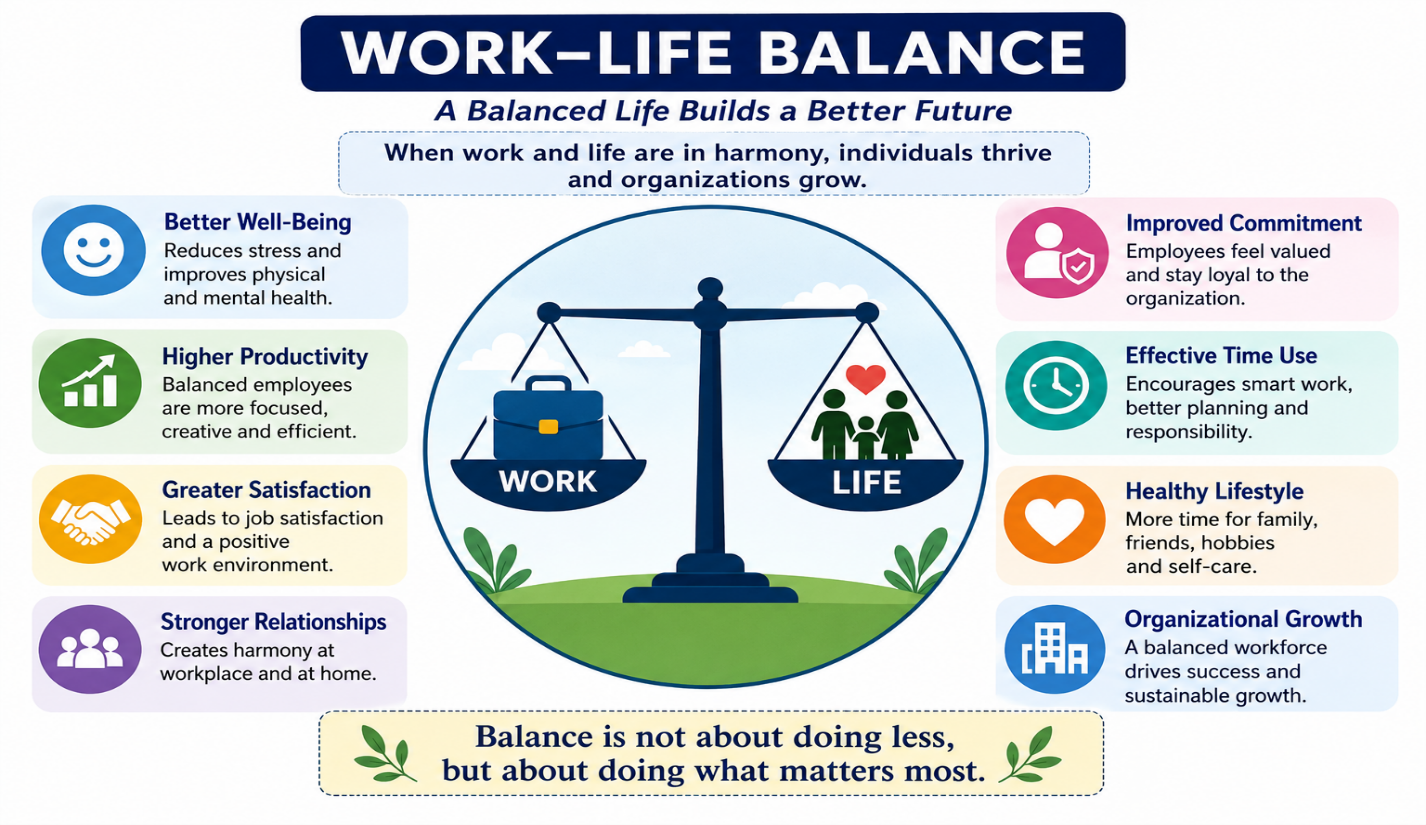
One of the most significant consequences of occupational stress is its negative effect on psychological well-being. Chronic exposure to stress may lead to anxiety, depression, emotional exhaustion, irritability, frustration, and reduced self-esteem. Employees experiencing prolonged stress often report feelings of helplessness, hopelessness, and decreased motivation. Excessive stress may also contribute to burnout, a syndrome characterized by emotional exhaustion, depersonalization, and reduced personal accomplishment. Maslach and Jackson (1981) identified burnout as a serious consequence of chronic occupational stress that adversely affects both employees and organizations.
Job Satisfaction and Organizational Commitment among Professionals#
Job satisfaction and organizational commitment are two important indicators of employee attitude and organizational effectiveness. Job satisfaction refers to the positive feeling or emotional response that employees develop toward their job, work environment, salary, promotion opportunities, supervision, recognition and professional growth. Locke (1976) defined job satisfaction as a pleasurable emotional state resulting from the appraisal of one’s job experiences. When professionals feel valued, supported and fairly treated, they are more likely to experience satisfaction in their work.
Organizational commitment refers to the psychological attachment and loyalty of employees toward their organization. It reflects the willingness of professionals to remain with the organization, contribute to its goals and identify themselves with its values. Meyer and Allen (1991) explained organizational commitment through three dimensions: affective commitment, continuance commitment and normative commitment. Affective commitment refers to emotional attachment; continuance commitment is based on the cost of leaving; and normative commitment reflects a sense of duty or obligation to remain with the organization.
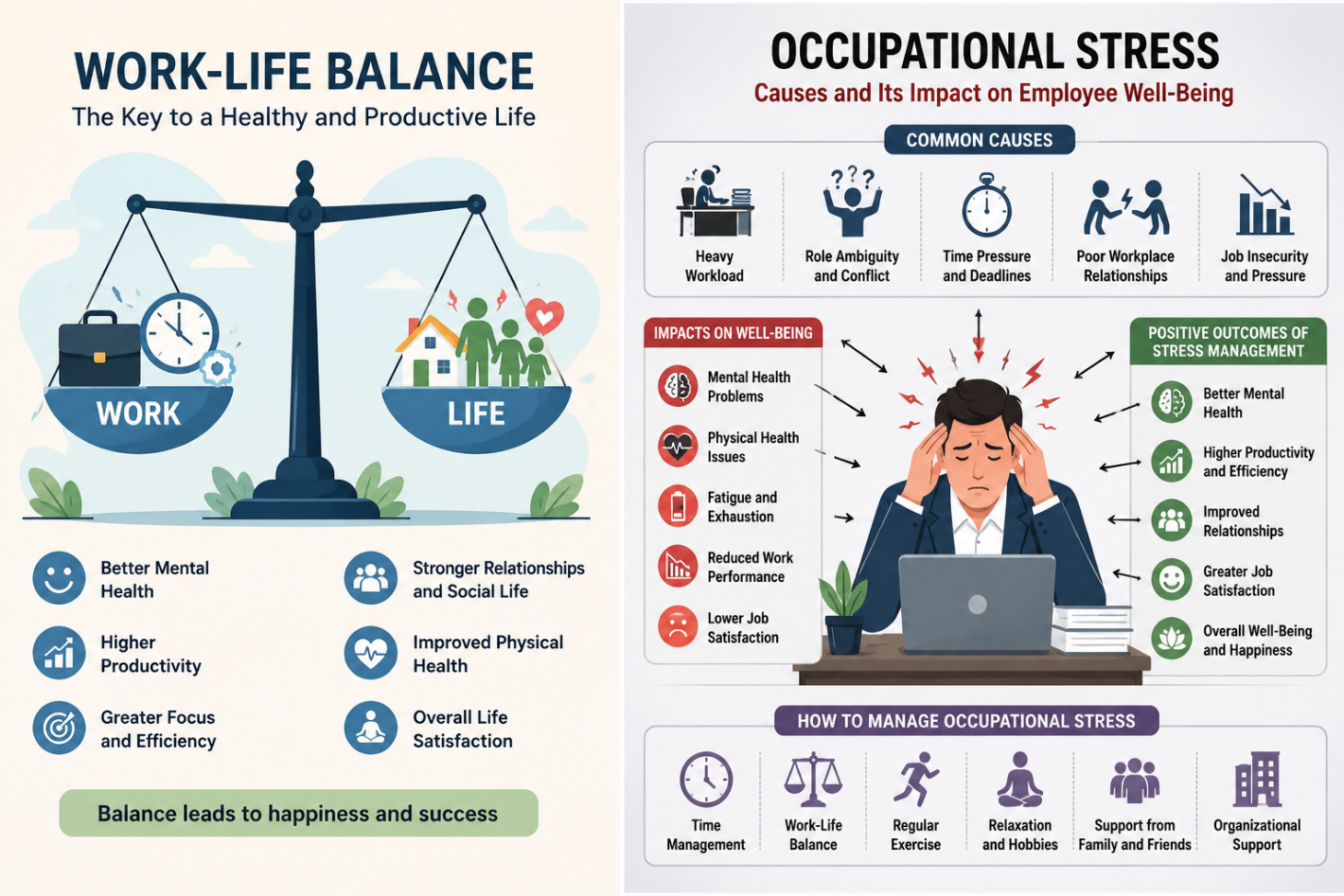
Among professionals, job satisfaction is influenced by several factors such as workload, autonomy, leadership style, job security, role clarity, interpersonal relations, salary, recognition and work-life balance. Professionals working in supportive environments generally show higher motivation, productivity and positive workplace behaviour. On the other hand, excessive workload, occupational stress, poor leadership, lack of recognition and limited career growth may reduce satisfaction. Spector (1997) observed that job satisfaction is closely related to employee performance, absenteeism, turnover intention and psychological well-being.
Job satisfaction and organizational commitment are strongly interrelated. Satisfied employees are more likely to develop emotional attachment and loyalty toward their organization. When professionals feel that their organization respects their efforts, supports their growth and provides a healthy work environment, they become more committed. Conversely, dissatisfied employees may show low motivation, weak commitment, absenteeism and intention to leave. Mowday, Porter and Steers (1982) emphasized that organizational commitment develops when employees identify with organizational goals and feel a desire to remain part of the organization.
In public and private sector organizations, job satisfaction and commitment may differ due to variations in work culture, job security, promotion systems, workload and organizational support. Public sector professionals may value job security, stability and social service, while private sector professionals may be influenced by salary, incentives, career advancement and performance-based recognition. However, in both sectors, satisfaction and commitment depend largely on fairness, respect, supportive leadership and balanced work conditions.
Role and Significance of Work-Life Balance in Public and Private Sector Organizations#
Work-life balance has emerged as a critical concern in contemporary organizations due to increasing workplace demands, changing family structures, technological advancements, and evolving employee expectations. In both public and private sector organizations, employees are expected to perform multiple professional roles while simultaneously fulfilling personal, family, and social responsibilities. The ability to maintain a healthy balance between work and personal life has become essential for employee well-being, organizational effectiveness, and sustainable development. Consequently, work-life balance is no longer viewed merely as an individual concern; rather, it is recognized as a strategic organizational issue that influences productivity, employee retention, job satisfaction, and organizational commitment.
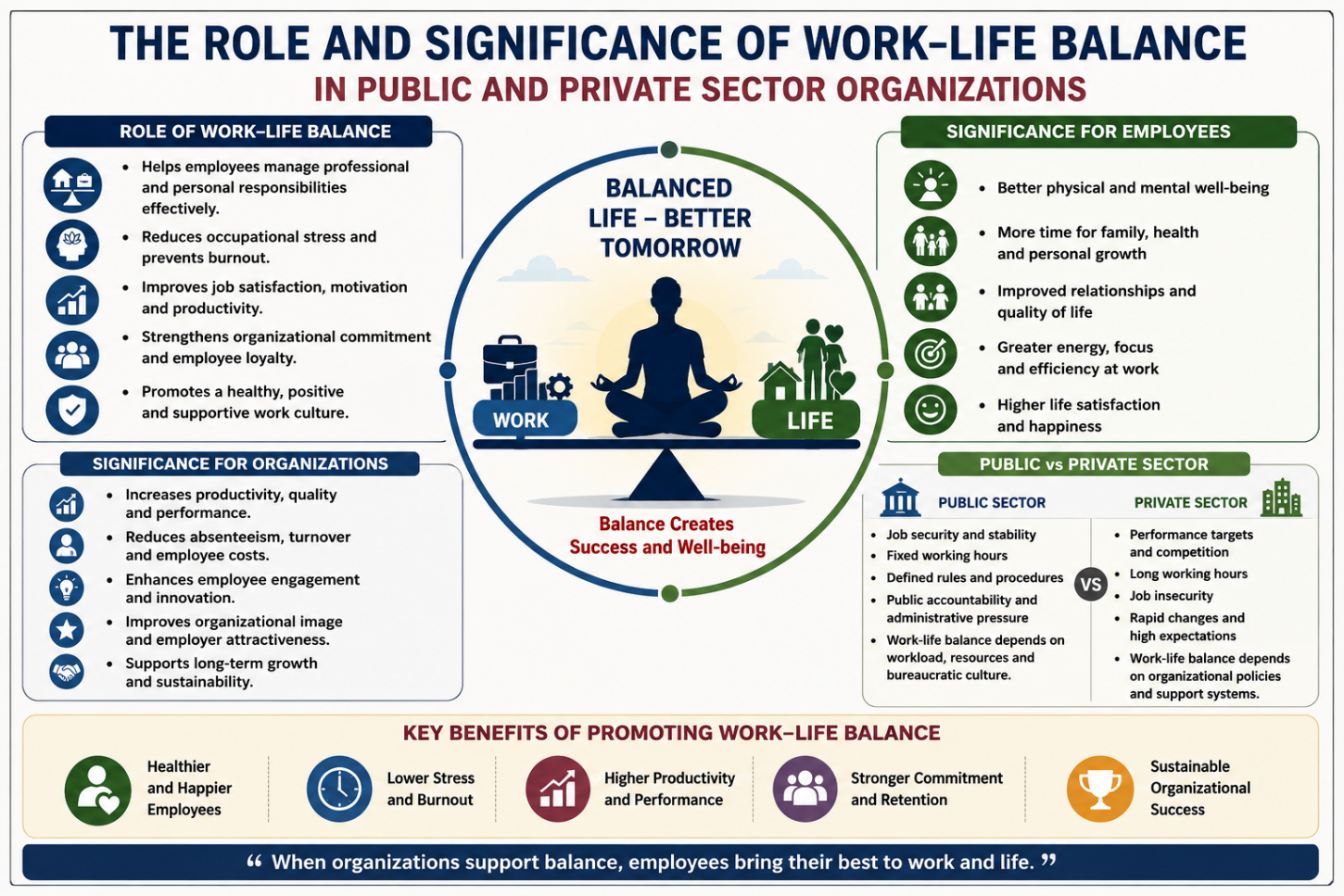
Work-life balance also contributes significantly to organizational productivity and performance. Employees who maintain a healthy balance between work and personal life are generally more energetic, motivated, focused, and productive. They exhibit higher levels of creativity, problem-solving ability, and engagement in organizational activities. In contrast, employees experiencing chronic work-life imbalance may display absenteeism, presenteeism, reduced efficiency, and poor performance. Kossek and Ozeki (1998) reported that effective work-life balance is positively associated with job satisfaction and organizational performance. Thus, promoting work-life balance is beneficial not only for employees but also for organizational success.
Another important significance of work-life balance lies in promoting gender equality and workforce diversity. Contemporary organizations employ individuals from diverse demographic backgrounds, including working parents, dual-career couples, single parents, and caregivers. Family-friendly policies such as maternity leave, paternity leave, childcare support, flexible schedules, and remote working options enable employees to manage family responsibilities more effectively. Such practices encourage workforce participation, particularly among women, and contribute to greater workplace diversity and inclusion.
Work-life balance is also important for enhancing organizational image and employer attractiveness. Organizations known for supportive work environments and employee-friendly policies are more likely to attract and retain highly skilled professionals. In an increasingly competitive labour market, work-life balance initiatives serve as an important component of employer branding. Prospective employees often evaluate organizations based on their commitment to employee welfare, flexibility, and quality of work life. Consequently, organizations that prioritize work-life balance gain a competitive advantage in talent acquisition and retention.
Conclusion#
Work-life balance, occupational stress, job satisfaction and organizational commitment are closely connected dimensions of professional life. The study highlights that when professionals are able to maintain a healthy balance between work and personal responsibilities, they experience lower occupational stress, greater job satisfaction and stronger organizational commitment.
In both public and private sectors, excessive workload, long working hours, role pressure and lack of organizational support may disturb work-life balance and reduce employee well-being. On the other hand, supportive leadership, flexible policies, fair workload, recognition and healthy work culture can improve satisfaction and commitment among professionals.
Thus, work-life balance is not only a personal need but also an important organizational strategy. Organizations that promote employee-friendly practices can reduce stress, improve productivity and retain committed employees. Therefore, balanced work conditions are essential for the well-being of professionals and the long-term success of public and private sector organizations.
Works Cited#
- Allen, Tammy D. “Family-Supportive Work Environments: The Role of Organizational Perceptions.” Journal of Vocational Behavior, vol. 58, no. 3, 2001, pp. 414–435.
- Clark, Sue Campbell. “Work/Family Border Theory: A New Theory of Work/Family Balance.” Human Relations, vol. 53, no. 6, 2000, pp. 747–770.
- Cooper, Cary L., and Judi Marshall. “Occupational Sources of Stress: A Review of the Literature Relating to Coronary Heart Disease and Mental Ill Health.” Journal of Occupational Psychology, vol. 49, no. 1, 1976, pp. 11–28.
- Cooper, Cary L., and Susan Cartwright. “Healthy Mind; Healthy Organization—A Proactive Approach to Occupational Stress.” Human Relations, vol. 47, no. 4, 1994, pp. 455–471.
- Deery, Margaret. “Talent Management, Work-Life Balance and Retention Strategies.” International Journal of Contemporary Hospitality Management, vol. 20, no. 7, 2008, pp. 792–806.
- Greenhaus, Jeffrey H., and Nicholas J. Beutell. “Sources of Conflict between Work and Family Roles.” Academy of Management Review, vol. 10, no. 1, 1985, pp. 76–88.
- Greenhaus, Jeffrey H., Karen M. Collins, and Jason D. Shaw. “The Relation between Work-Family Balance and Quality of Life.” Journal of Vocational Behavior, vol. 63, no. 3, 2003, pp. 510–531.
- Greenhaus, Jeffrey H., and Tammy D. Allen. “Work–Family Balance: A Review and Extension of the Literature.” Handbook of Occupational Health Psychology, edited by James C. Quick and Lois E. Tetrick, 2nd ed., APA, 2011, pp. 165–183.
- House, James S. Work Stress and Social Support. Addison-Wesley, 1981.
- Kahn, Robert L., et al. Organizational Stress: Studies in Role Conflict and Ambiguity. Wiley, 1964.
- Kossek, Ellen Ernst, and Cynthia Ozeki. “Work-Family Conflict, Policies, and the Job-Life Satisfaction Relationship: A Review and Directions for Organizational Behavior-Human Resources Research.” Journal of Applied Psychology, vol. 83, no. 2, 1998, pp. 139–149.
- Lazarus, Richard S., and Susan Folkman. Stress, Appraisal, and Coping. Springer, 1984.
- Locke, Edwin A. “The Nature and Causes of Job Satisfaction.” Handbook of Industrial and Organizational Psychology, edited by Marvin D. Dunnette, Rand McNally, 1976, pp. 1297–1349.
- Maslach, Christina, and Susan E. Jackson. “The Measurement of Experienced Burnout.” Journal of Occupational Behavior, vol. 2, no. 2, 1981, pp. 99–113.
- Meyer, John P., and Natalie J. Allen. “A Three-Component Conceptualization of Organizational Commitment.” Human Resource Management Review, vol. 1, no. 1, 1991, pp. 61–89.
- Mowday, Richard T., Lyman W. Porter, and Richard M. Steers. Employee-Organization Linkages: The Psychology of Commitment, Absenteeism, and Turnover. Academic Press, 1982.
- Quick, James Campbell, and Debra F. Henderson. “Occupational Stress: Preventing Suffering, Enhancing Wellbeing.” International Journal of Environmental Research and Public Health, vol. 13, no. 5, 2016, p. 459.
- Spector, Paul E. Job Satisfaction: Application, Assessment, Causes, and Consequences. Sage Publications, 1997.